
Visual Impact (Examples)
How GRM shapes clarity in design, imaging, and AI visuals
The Geometric Ratio Model (GRM) introduces a new way of thinking about geometry, proportion, and design. This page shows the visual impact of GRM: how simplicity, symmetry, and consistency emerge when shapes are described through fixed proportional structure rather than abstract constants.
All examples below are generated using prompts guided by GRM logic, either applied directly or used as a contrast against classical, less structured prompting.
1. A Circle within a Square – Fixed Ratio Logic
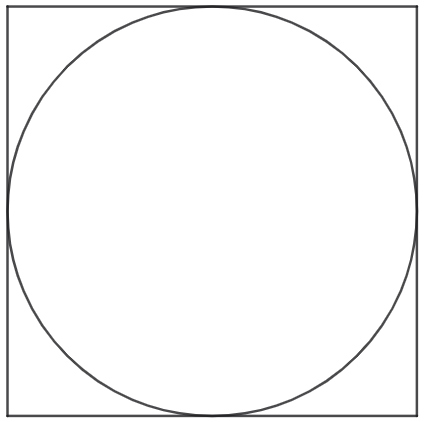
Fixed ratio logic in 2D
A circle perfectly inscribed within a square occupies 0.7854 SAU (Square Area Units). GRM uses this fixed proportion as a canonical reference for ratio-based reasoning in digital and geometric systems.
2. A Sphere within a Cube – Dimensional Extension
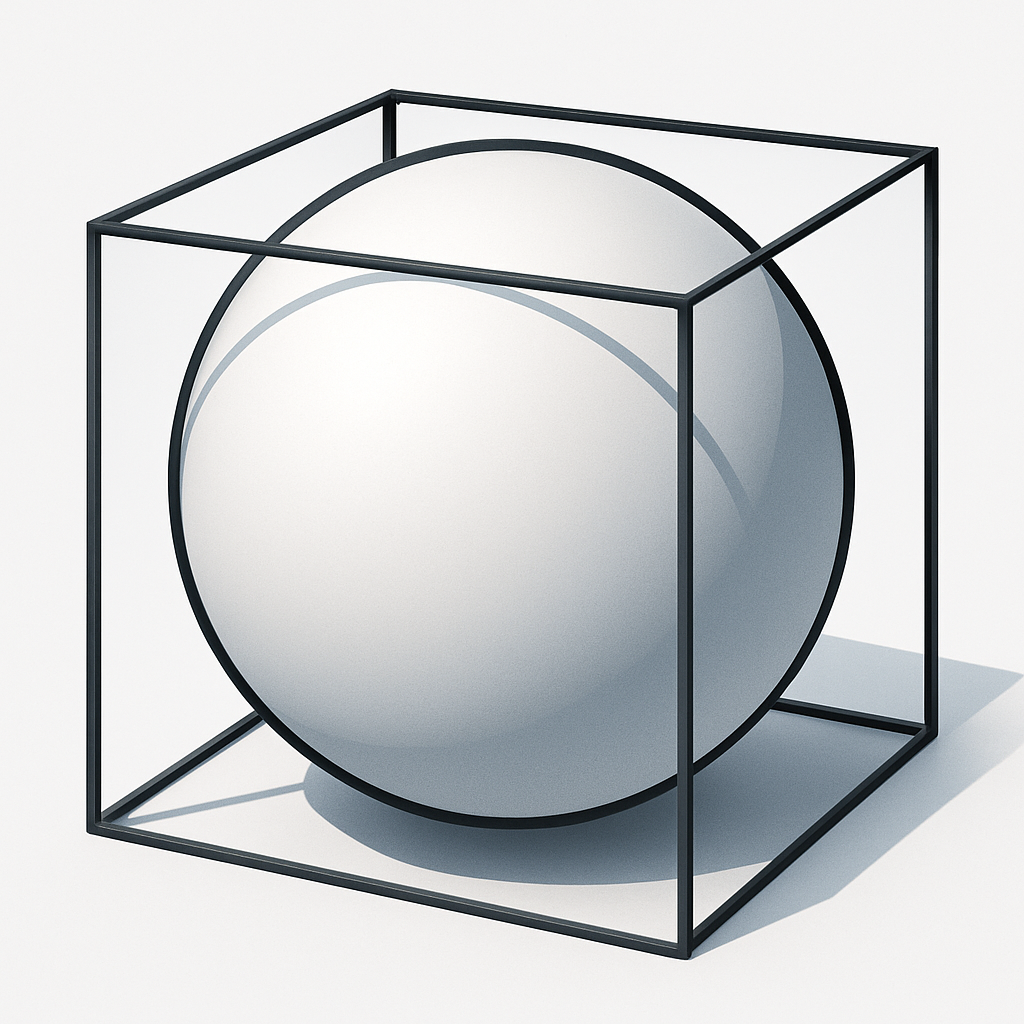
Dimensional extension into 3D
In 3D, a sphere perfectly inscribed within a cube occupies 0.5236 SVU (Square Volume Units). This extends the GRM logic from 2D into 3D while maintaining a consistent container-first approach.
2.1 From Circle to Sphere using GRM
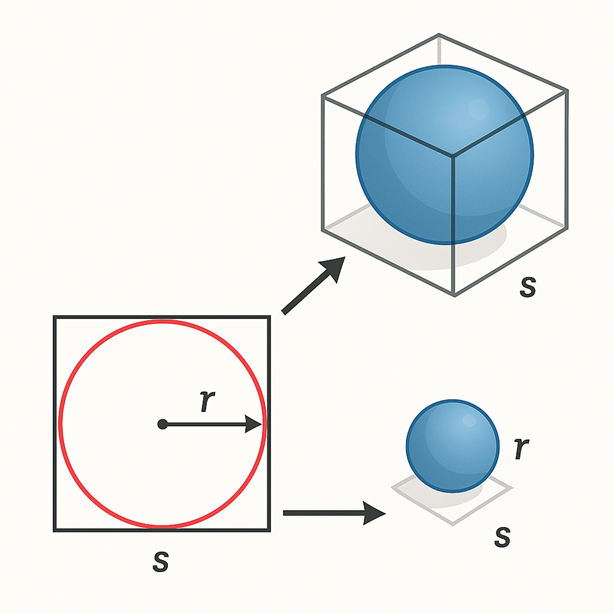
GRM maintains dimensional coherence by applying the same structural logic across dimensions. Instead of relying on radius-based formulas, GRM evaluates shapes by how they occupy space relative to their square or cubic container.
3. GRM vs Classical Geometry – A Visual Comparison
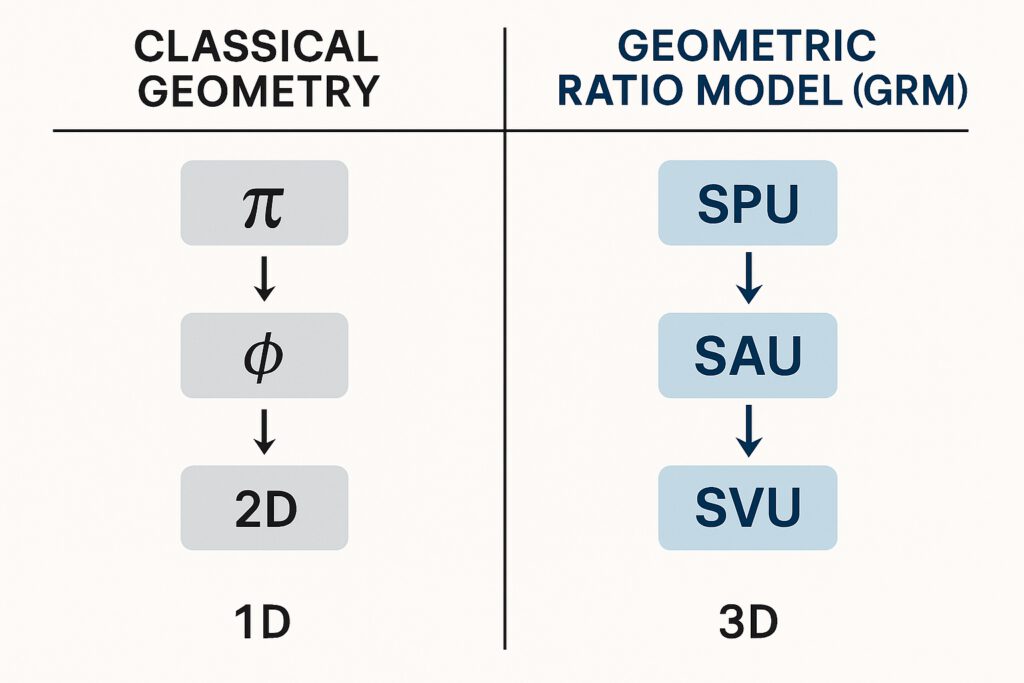
Visual comparison of reference frames
Classical geometry often relies on internal parameters and irrational constants (such as π). GRM reframes geometric comparison through a consistent reference structure: the square or cube as container. This enables proportional interpretation that is easier to map into digital environments.
4. GRM in AI Visual Generation
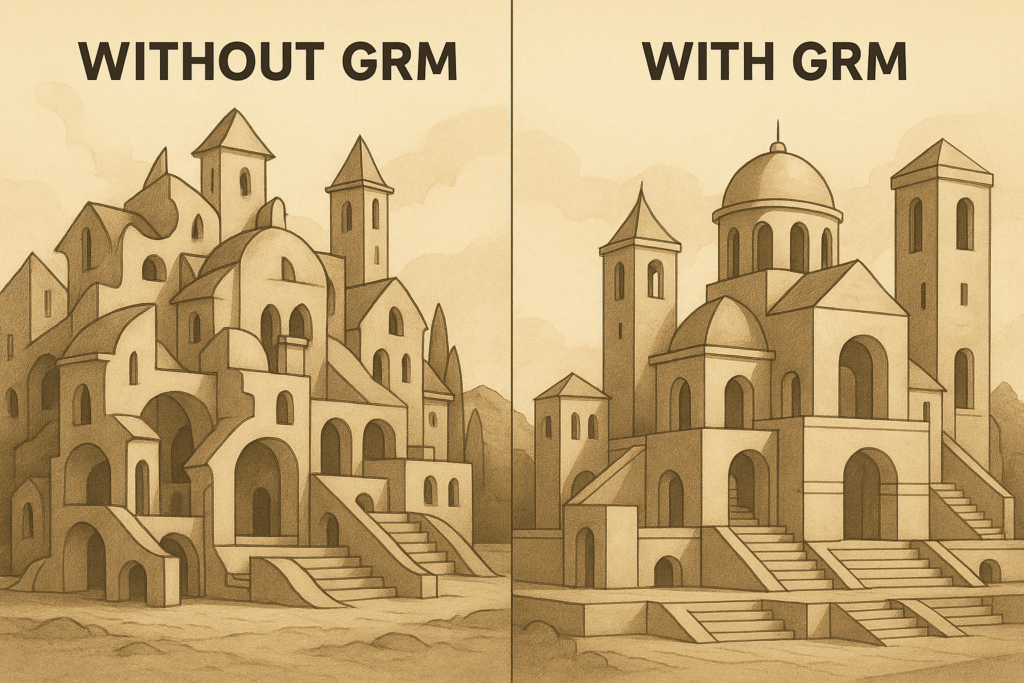
Structured prompting vs unstructured prompting
The image above illustrates two versions of the same concept generated with and without GRM-based prompting.
- Left: prompting without explicit proportional structure, resulting in inconsistency
- Right: the same concept guided by GRM ratios and framing logic, improving visual coherence
This demonstrates the practical value of geometric prompting for AI-generated visuals.
5. Complexity Made Simple – The Power of Ratio
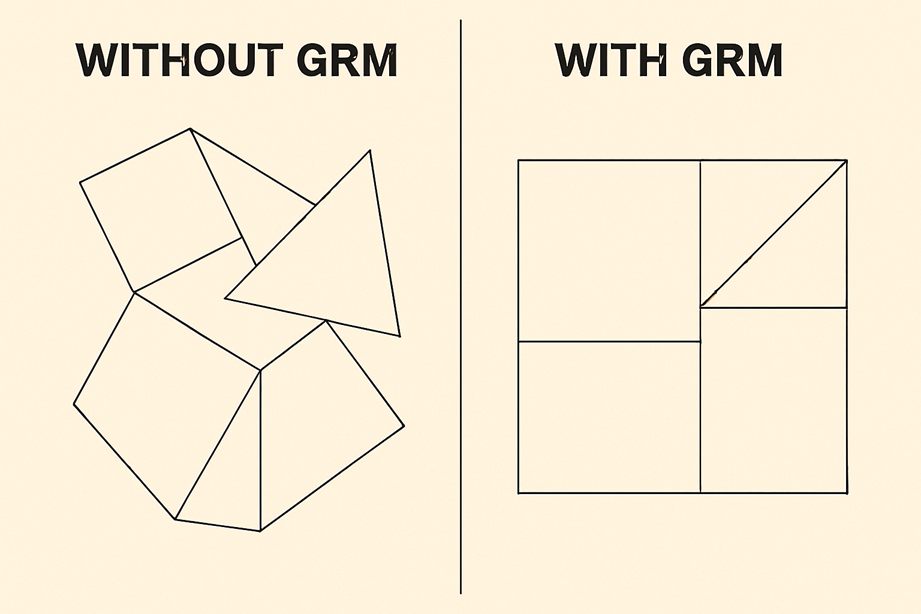
The stabilizing effect of shared proportions
Without a shared proportional reference frame, compositions can become visually noisy, even when made of simple shapes. GRM introduces a consistent frame that allows multiple forms to coexist in a readable, scalable composition.
6. GRM in Photorealism and Composition

Hidden structure becomes visible
Even in photorealistic imagery, proportion and framing influence how we perceive balance and flow. GRM can be used as a guiding grid logic to improve composition and structural harmony.
7. To the Metaverse:
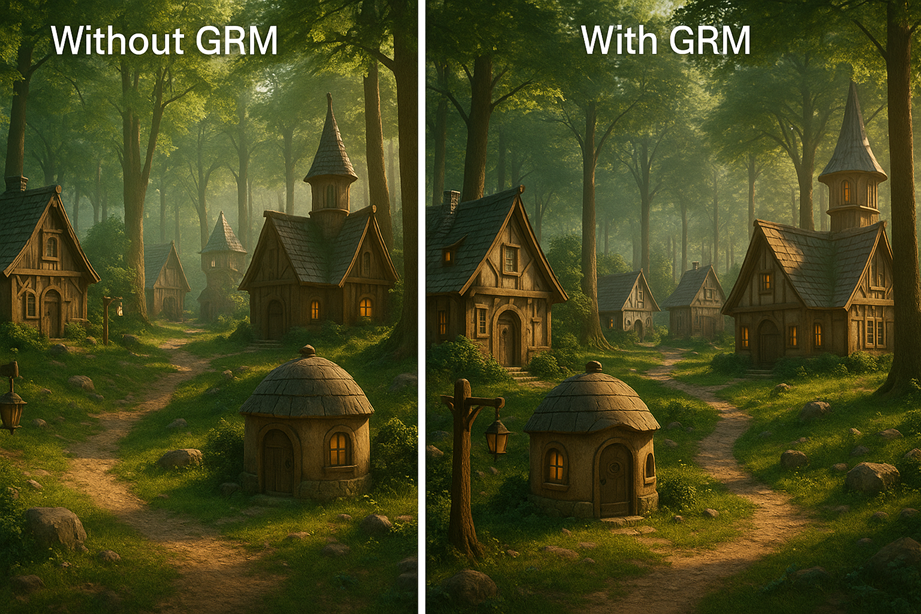
Structure matters in fantasy and the metaverse
In game environments and virtual worlds, visual coherence depends heavily on structure and proportional rhythm. GRM offers a design grammar that helps maintain consistency across assets, layouts, and environments.
About these examples
All visuals on this page were generated using ChatGPT image tools, guided by prompts that apply or contrast the Geometric Ratio Model (GRM).
Want to Learn More?
Explore the whitepapers, GPT tools, and prompt templates or contact us for tailored applications.
Go to GRM Resources • Contact Us
Powered by the Geometric Ratio Model (GRM) by M.C.M. van Kroonenburgh, MSc. i-Depot (BOIP) Reference no. 151927.